Flexing on a discovery call
By Luke Williams · October 10, 2026 · 4 minute read
Most discovery call training is about what to ask: pain, budget, timeline, decision process. Good questions matter. But the same questions, asked the same way, get very different answers depending on who's on the other end.
A Direct buyer gets impatient with a slow warm-up. A Steady buyer shuts down when you push for budget in minute three. The questions weren't wrong. The style was.
The good news: the first two minutes of a discovery call tell you most of what you need to know about how this person wants to be sold to.
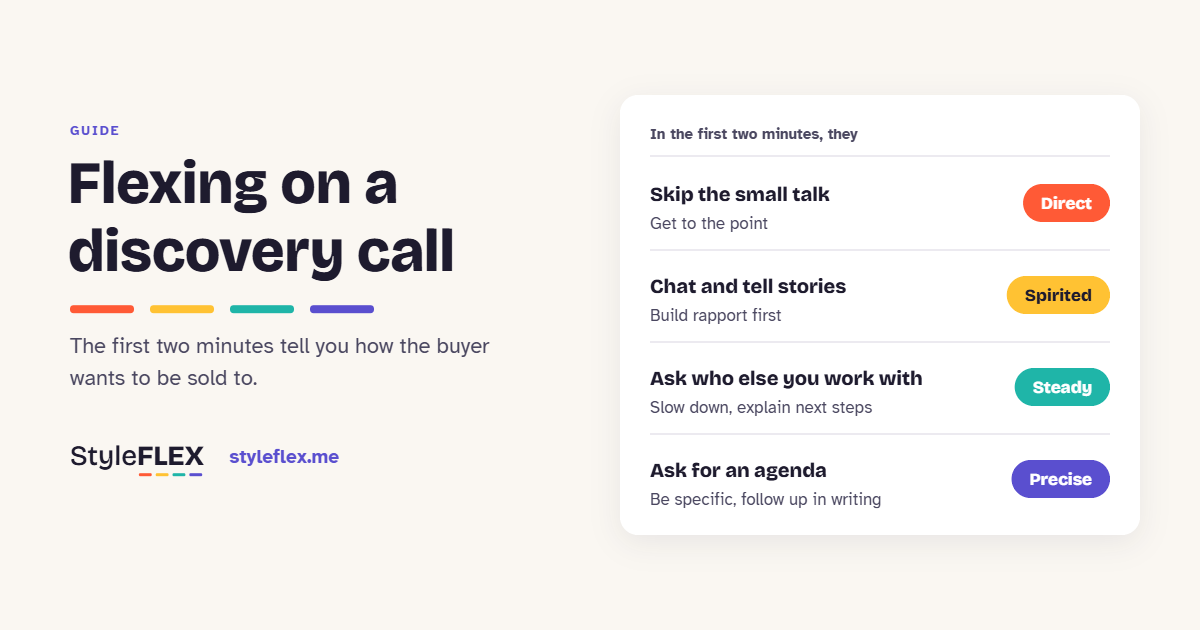
What to listen for in the first two minutes
| If they | They likely lead with | Run the call by |
|---|---|---|
| Skip the small talk, ask what this is about, check the time | Direct | Stating the purpose in one sentence, asking your sharpest questions first, and ending early if you can |
| Chat easily, tell stories, jump between topics | Spirited | Building rapport first, asking open questions, and recapping often so the call stays on track |
| Are polite and careful, ask who else you work with, mention their team | Steady | Slowing down, explaining what happens after the call, and asking how the change would affect their people |
| Ask for an agenda, want specifics, take notes, ask how it works | Precise | Sending an agenda ahead, asking specific questions, and promising details in writing |
You'll be wrong sometimes. That's fine. Their reactions will tell you quickly, and you can shift.
Same questions, four ways to ask
The questions you need answered don't change. How you ask them does. Take budget:
- Direct: "What budget have you set aside for this?"
- Spirited: "If this worked the way you hope, what would it be worth to you?"
- Steady: "How do decisions like this usually get funded on your team? No pressure, I just want to plan the right next step."
- Precise: "Is there an approved budget range, and what does the approval process look like?"
Each version gets the same information. Each one feels natural to a different person.
How to close the call
- Direct: Propose a specific next step and a date. Let them say yes or change it.
- Spirited: Summarize what you heard, with energy, and get the next meeting on the calendar while you're both still on.
- Steady: Lay out exactly what happens next, who's involved, and when you'll follow up.
- Precise: Confirm what you'll send in writing, and when. Then send it when you said you would.
How to start
- Know the style you lead with. Your discovery calls almost certainly run at your pace. Once you know it, you know which buyers you're rushing and which you're boring.
- Write your top three questions four ways. Budget, timeline and decision process. It takes ten minutes and you'll use it on every call.
- Listen first, pitch later. Give the prospect the first two minutes. They'll tell you how to run the rest.
Closing
Discovery is about learning what the buyer needs. That includes how they need to be talked to.
StyleFLEX helps sales teams find the style each rep leads with and read the style each buyer leads with. Take the assessment at styleflex.me.
Related: The risk of not flexing in sales · How to read a customer's communication style from one email